Open-source 25 kg quadcopter with Python-generated parts
When it comes to DIY drones, people typically think of small FPV quads running Betaflight or generic carbon frames from AliExpress. But when you need a machine capable of carrying 5-8 kg of payload and hovering for half an hour, developers usually hit a wall of proprietary industrial platforms with sky-high price tags.
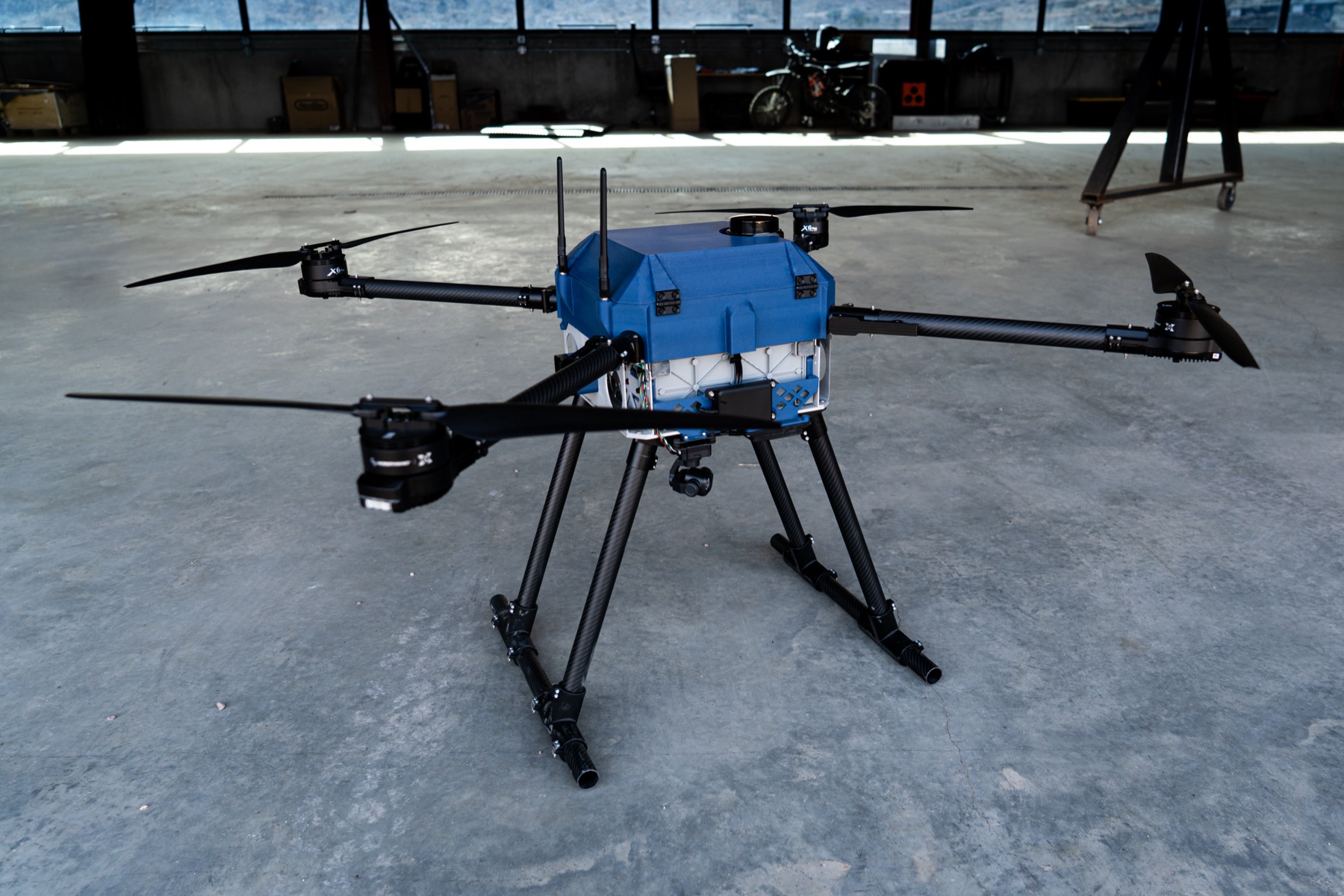
The open-source Project Quiver from Arrow Air offers an alternative approach. This is documentation, board source files, and parametric drawings for building a complete heavy quadcopter with a 25 kg maximum takeoff weight. The entire repository is published under the CERN Open Hardware Licence (CERN-OHL-S).
What's inside the repository
Instead of the typical folder of haphazardly dumped Fusion 360 or SolidWorks binary files, they took an unconventional approach to the mechanical design. The entire CAD assembly is built using the Python package build123d. This is a tool for programmatic geometry description that generates STEP models from code. This approach enables proper Git version control for physical frame components.
The repository source contains four main areas:
src/quiver/— programmatic CAD assembly of the frame and fasteners in Python.src/pcb/— KiCad PCB projects. The electronics are split across four separate boards, so if something breaks you won't need to replace the entire controller unit.src/printing/— ready-made profiles and settings for 3D printing protective elements and housings.src/manufacturing/— DXF drawings for CNC carbon milling and laser cutting.
Hardware and flight characteristics
The platform is designed for real field work, not just one-off hangar tests. The frame is weatherproofed, with a sealed electronics bay and thoughtful rain deflection geometry.
Here's the breakdown of specs and power system:
- Motors and ESCs: Hobbywing X6 Plus
- Battery: Tattu 14S 30Ah
- Hover time: 25 to 31 minutes depending on load
- Navigation: dual GNSS modules with RTK support for centimeter-accurate positioning
- Software: standard ArduPilot stack with control via QGroundControl or Mission Planner
Three quick-release interfaces (bottom, left, and right) are provided for payload equipment. This allows you to quickly swap gimbals with cameras, lidars, grippers, or delivery modules without disassembling half the drone.
How the repository is organized
The project structure is clean, with no unnecessary clutter:
project-quiver/
├── docs/                    # Документация и отчеты
├── src/
│   ├── quiver/              # CAD-сборка на build123d
│   ├── pcb/                 # Платы KiCad (4 модуля)
│   ├── printing/            # Профили для 3D-печати
│   └── manufacturing/       # DXF и файлы для ЧПУ
├── flight-test/             # Логи реальных летных испытаний
└── task-grant-bounty/       # Задачи, баунти и спецификации
Separately worth noting is the flight-test folder with real flight logs. You can open the telemetry and see how the drone behaves in the air before ordering carbon and motors.
Who will find this project useful in practice
Building such a machine will cost a pretty penny in components: a 14S 30Ah battery and X6 Plus motors don't come cheap. So Project Quiver is unlikely to be suitable for a first encounter with copters.
But the project will definitely be appreciated by:
- Robotics teams that need a reliable base for heavy sensors or lidars.
- Delivery and monitoring system developers tired of proprietary firmware on commercial drones.
- Engineers learning programmatic hardware design through Python and KiCad.
The authors also provide ready-made dev-kit drones to developers with interesting payload projects — they have a grant program and a Discord channel for this. If you've been looking for an open alternative to heavy industrial platforms, Quiver's source code definitely deserves a closer look.
Related projects