How to Integrate a Zoo of IP Cameras with Your Web Project
Imagine this scenario: you need to build a video surveillance system with a web interface. Seems straightforward, right? But then you discover that you have a dozen cameras from different manufacturers, some of them use the GB28181 protocol (a standard popular in Asia), while others stream video via RTSP. How do you bring it all together, display it in a browser without plugins, and give users a convenient control panel?
Sound familiar? Instead of spending weeks writing your own solution from scratch, you can use an existing one. Today we'll take a look at wvp-GB28181-pro — a real find for anyone working with video surveillance. It's a deployment-ready platform that solves most of the headaches associated with IP cameras.

What is wvp-GB28181-pro?
In short, wvp-GB28181-pro is an open-source server-side platform for video surveillance that comes with a ready-made web interface. Its main feature is support for the GB28181 Chinese national standard, which allows direct connection to a vast number of professional cameras and network video recorders (NVRs) from giants like Hikvision and Dahua.
But don't let the specific standard scare you off! The platform also works great with standard RTSP/RTMP streams. Essentially, it's a universal gateway that can "digest" video from various sources and deliver it in a web-friendly format.
The project is written in Java and works in tandem with the powerful ZLMediaKit media server. This ensures cross-platform compatibility (Linux, Windows, macOS, x86, ARM) and high performance.
Why does a developer need this? Key features
Let's explore what specific tasks this project helps solve and why it's worth paying attention to.
1. Ready-made web interface out of the box
The best part — you don't need to write a frontend from scratch. After installation, you get a full-featured admin interface built with Vue, where you can:
- View video from multiple cameras simultaneously in split-screen mode.
- Control PTZ cameras: pan, tilt, and zoom.
- Work with presets (saved camera positions).
- Browse and download recordings from NVR or cloud storage.
- Configure recording schedules for each camera.
- Manage devices and their channels.
Here's what it looks like:
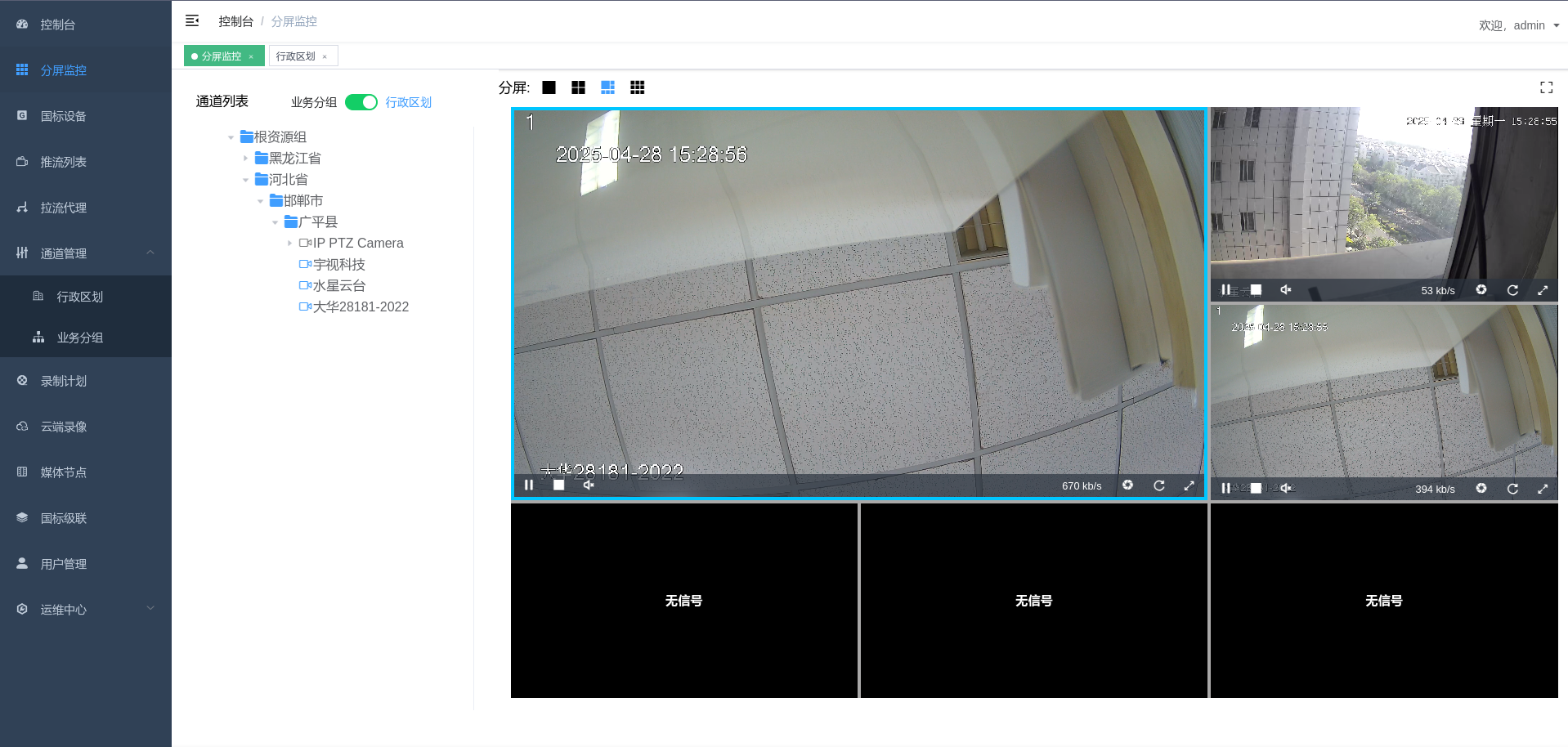 Split-screen view for multiple cameras Split-screen view for multiple cameras |
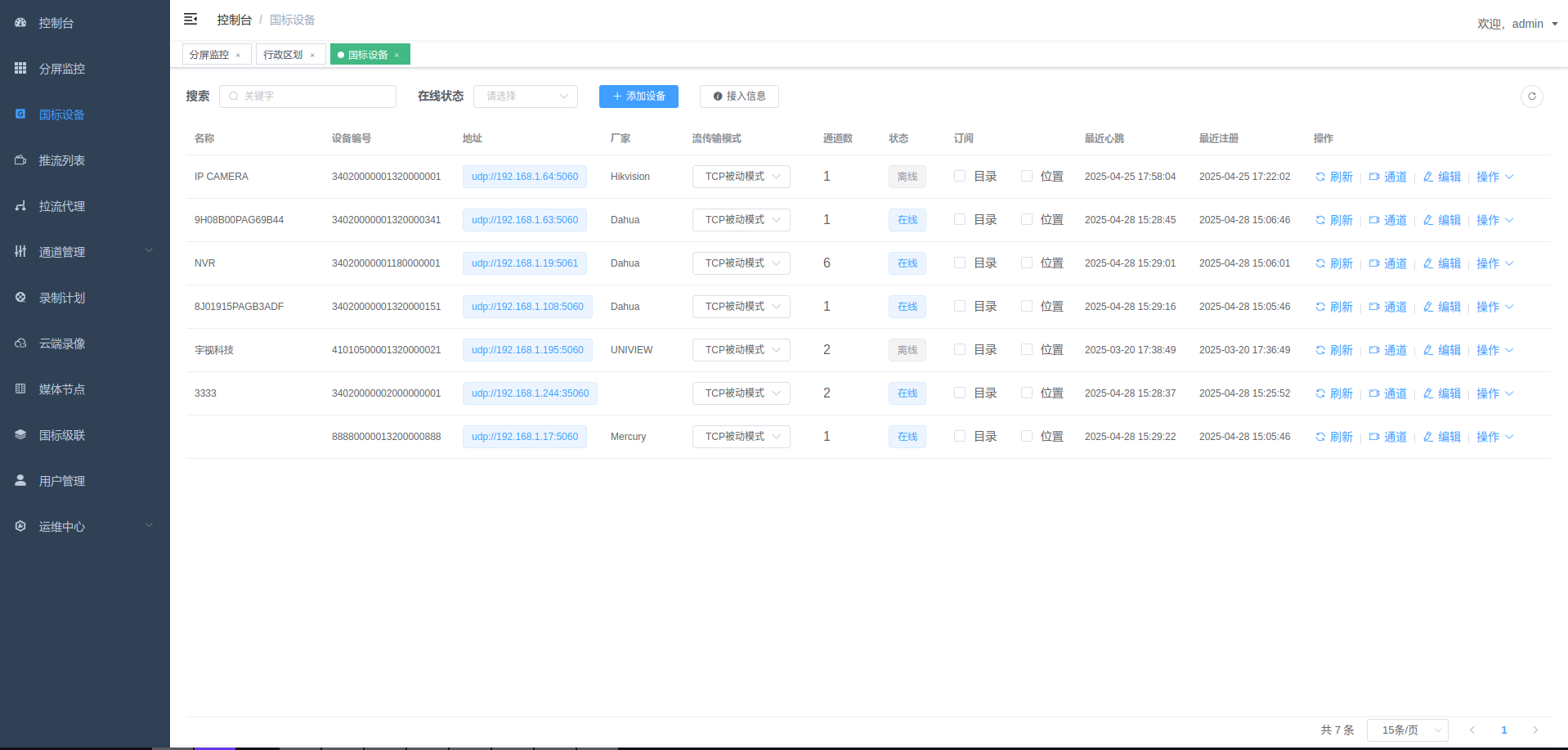 List of connected devices List of connected devices |
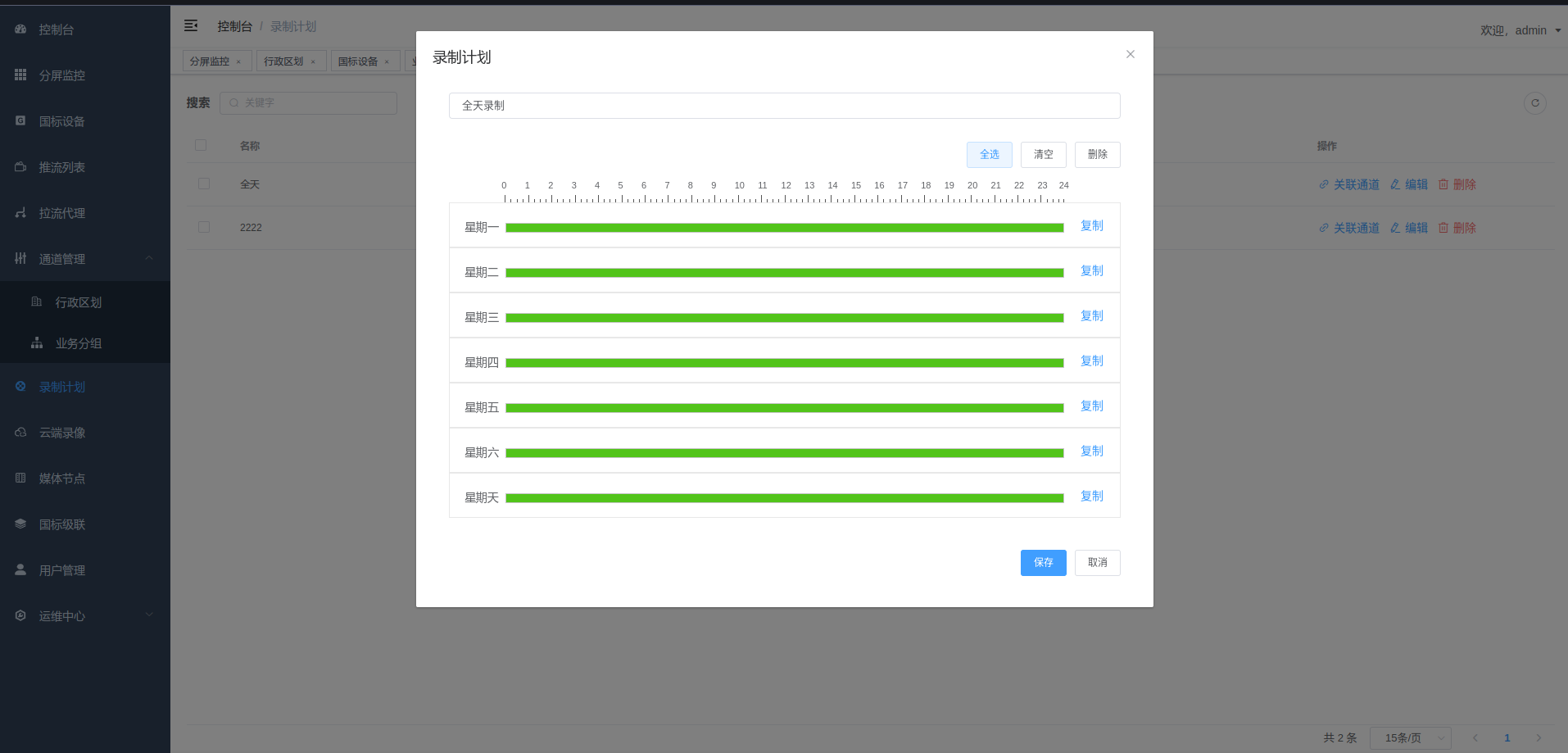 Recording schedule configuration Recording schedule configuration |
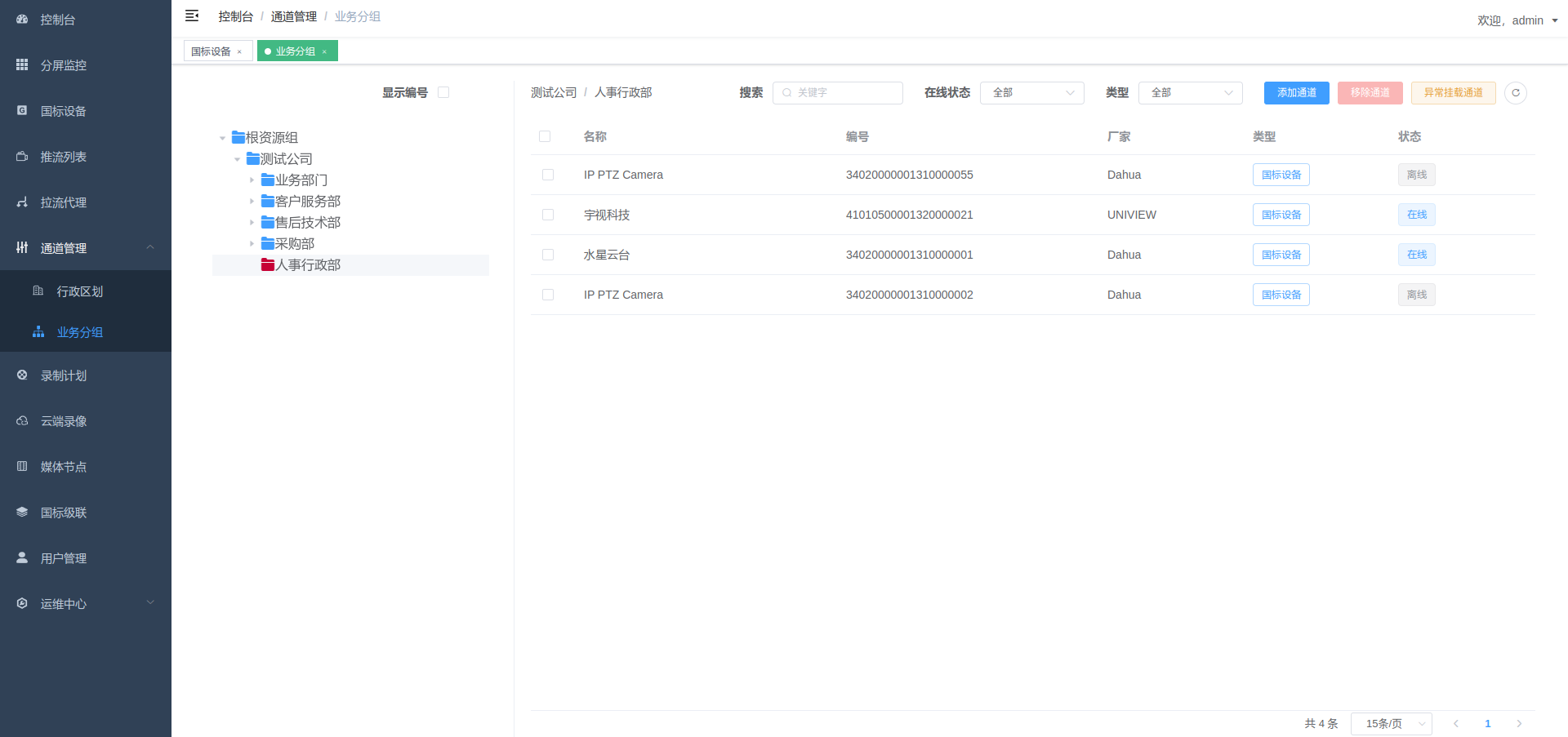 Grouping cameras into folders Grouping cameras into folders |
This saves hundreds of development hours and lets you quickly launch a working prototype or even a production-ready product.
2. "Omnivorous" video source support
The project isn't limited to a single protocol. You can connect:
- Cameras and NVRs via the GB28181 standard. This is its primary purpose.
- Any RTSP streams. For example, from standard IP cameras.
- RTMP streams. You can, for instance, receive streams from OBS and retransmit them.
Interestingly, the platform can also do the reverse: take a standard RTSP stream and "wrap" it in GB28181 to transmit to another, larger video surveillance system. This makes wvp-GB28181-pro a powerful tool for integration and modernization of legacy systems.
3. Flexible video delivery to the client
The platform fetches the video stream from the camera, and then can deliver it in any convenient format:
- HTTP-FLV / Websocket-FLV: great for low-latency streaming.
- HLS: the de facto standard for streaming on most devices, including mobile.
- RTSP / RTMP: for retransmission to other media servers.
Thanks to this, video from cameras can be easily embedded into any website or mobile app, and it will work in the browser without installing additional plugins.
4. Scalability and cascading
The project isn't designed for home use only. It supports:
- Cascading: the ability to combine multiple wvp-GB28181-pro servers into a hierarchical structure. For example, you can have local servers at each facility that transmit video to a central server at headquarters.
- Clustering: you can deploy multiple nodes for signal processing and media streaming to distribute load and ensure fault tolerance.
- Separate deployment: the management server (wvp) and media server (zlm) can be installed on different machines for better performance.
Practical use cases
Where can all this come in handy?
- Corporate video surveillance system: deploy on your own server and connect all company cameras, providing security staff with a convenient web interface.
- "Safe City" system: combine cameras from different districts using cascading.
- Streaming platform: receive RTMP streams from streamers and distribute them to viewers via HLS.
- IoT system integration: embed video from IP cameras into a smart home or industrial process control dashboard.
- Legacy system modernization: connect an old fleet of analog cameras through NVRs and give them a new life with a modern web interface.
Open source and commercial opportunities
The project's core is distributed under the MIT license, which gives great freedom in use and modification. You can deploy it on your own servers for free and even use it in commercial products.
At the same time, the authors also have closed versions with extended functionality, such as ONVIF protocol support, the newer GB28181-2022 version, user access control, and other enterprise "features." This is a fair model that allows the project to continue developing.
wvp-GB28181-pro is a powerful and flexible tool that can be a real lifesaver for developers facing video surveillance challenges. Instead of learning the intricacies of streaming protocols from scratch and writing yet another UI, you get a ready-made, stable platform.
Who should especially take a closer look:
- Java developers who need to quickly integrate video into their systems.
- System integrators working with video surveillance equipment.
- Startups building products in IoT and security.
Even if you don't directly work with Chinese cameras, this project deserves attention as an excellent example of a ready-made solution for managing and streaming video. Be sure to check out its GitHub page and give it a star to support the authors.
Related projects