Mercedes-Benz Releases ARDEP Platform for Automotive Electronics as Open Source
Developing electronics for automobiles has always been a closed-off field. An engineer or hobbyist wanting to build their own control unit or test diagnostics typically had to deal with proprietary stacks, expensive adapters from Vector or Peak, and a mountain of paperwork.
Recently, the Mercedes-Benz team decided to shake things up a bit and released the ARDEP (Automotive Rapid Development Platform) project on GitHub. It's a complete open-source package of hardware and software, purpose-built for rapid prototyping of automotive devices.
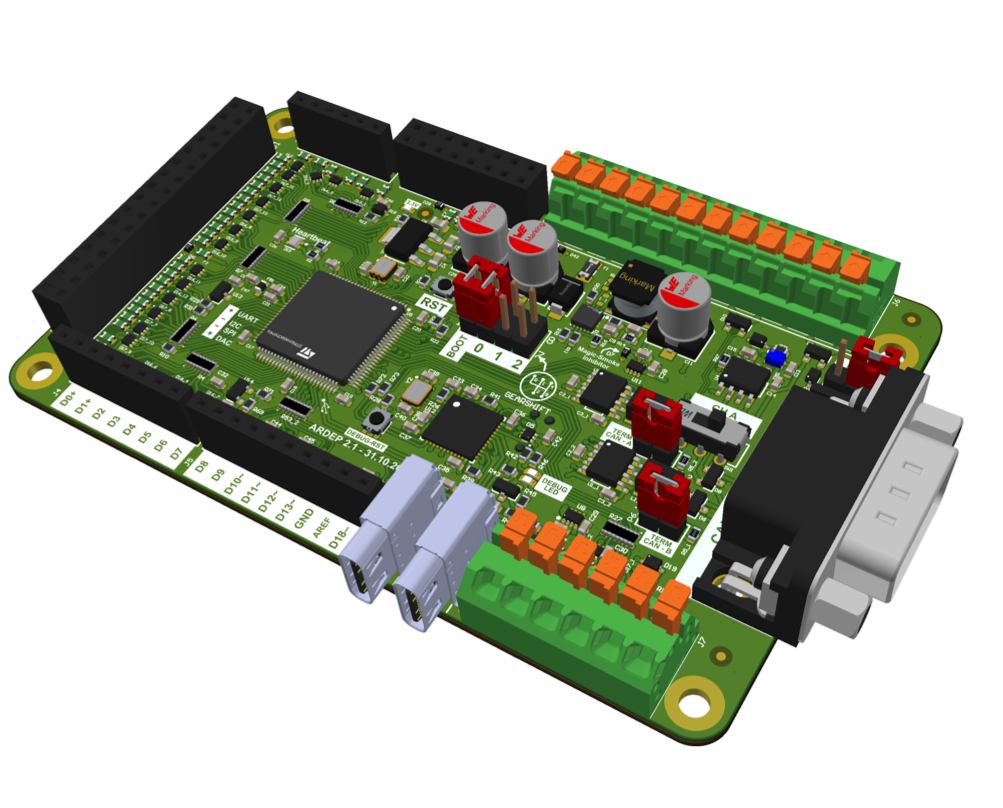
What's in the platform
ARDEP consists of two parts: debug board schematics with all manufacturing files and a software framework. Everything is released under the permissive Apache 2.0 license, so the project can be freely used as a foundation for commercial or hobbyist developments.
All the software runs on top of the Zephyr RTOS real-time operating system. It's a solid choice for embedded systems that require predictability, proper modularity, and support for modern C code.
What's under the hood (hardware)
The developers didn't bother creating yet another "Raspberry Pi" or a generic STM32 Nucleo clone. The board was designed from the ground up to meet the stringent requirements of automotive onboard networks:
- CAN and LIN transceivers are integrated directly onto the board. No external modules or long wires on the breadboard.
- Built-in debugger and programmer with integrated UART interface. Plug it into your laptop via USB and you can flash or read logs.
- Arduino headers compatibility. If you need to quickly attach a display or some obscure sensor to the board, standard shields will work.
- PowerIO Shield expansion board. This is the power section, capable of switching 6 input channels and 6 output channels at up to 48 V and 3 A per channel.
The power shield is genuinely impressive. It lets you control real automotive loads—solenoids, powerful valves, actuators, or auxiliary lighting—without additional relays.
Automotive stack in software
The real value of the repository isn't in the hardware blueprints, but in the ready-made implementation of standardized automotive protocols.
Out of the box, the code includes the UDS (Unified Diagnostic Services, ISO 14299) library. This is the protocol that official dealers and scanners use to communicate with ECUs in the car: reading faults, requesting sensor operating parameters, and running tests.
Alongside UDS comes support for firmware updates via DFU (Device Firmware Update) directly over the diagnostic bus. That means you can implement device update logic exactly as it works in a real production vehicle.
Who can benefit from this project
If you work in embedded development for commercial vehicles, automotive manufacturing, or build custom onboard systems for motorsport, ARDEP will save you weeks of PCB layout and writing basic drivers.
The repository can be used in several scenarios:
- Rapidly building an automotive ECU emulator for testing diagnostic scanners.
- Developing telematics units that read data from the CAN bus.
- Controlling power loads in a vehicle using the PowerIO Shield.
- Learning how Zephyr RTOS and the UDS protocol work on real hardware.
The bottom line
The repository has gathered around 400 stars so far, but the project is fresh and actively developing. The README is concise, but the docs and samples folders contain clear documentation with generated examples and PCB files.
You won't be able to buy a ready-made board in a store— you'll have to order PCB fabrication and assembly yourself using the gerber files from the repository. However, you can start exploring and adapting the software stack for your own microcontrollers right now.
Code, schematics, and documentation are available in the mercedes-benz/ardep repository.
Related projects