FoodYou, or How I Searched for an Open Nutrition Tracker Without Subscriptions and Data Leaks
Try opening any popular calorie counter in the App Store or Google Play. You'll be greeted by mandatory social media registration, a banner offering a premium subscription for 500 rubles per month, and a paid barcode scanner. Block the app's network access, and it will most likely refuse to work.
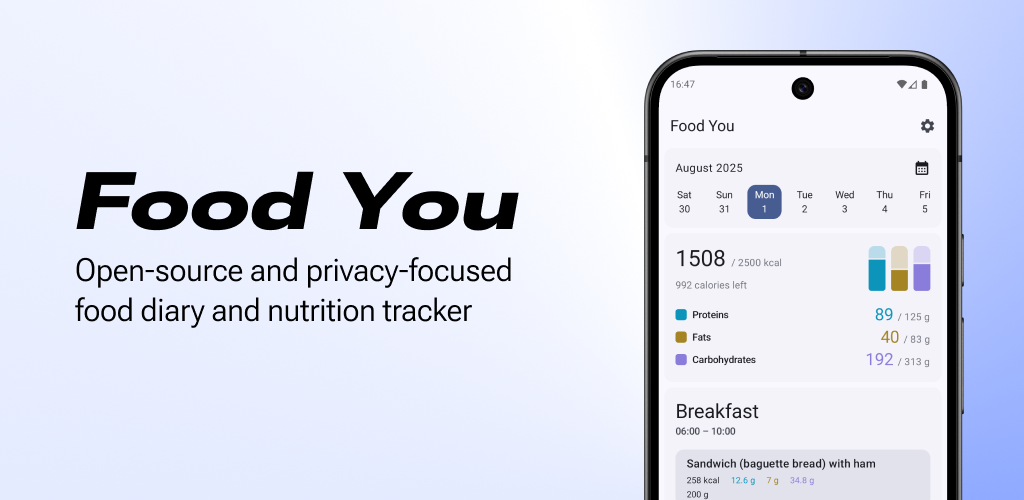
Polish developer Mateusz Maksimowicz ran into the same problem and wrote his own nutrition diary. The project is called FoodYou. It's an Android app written in Kotlin. It works strictly offline, requires no account, and is built according to Material You guidelines.
What's Inside
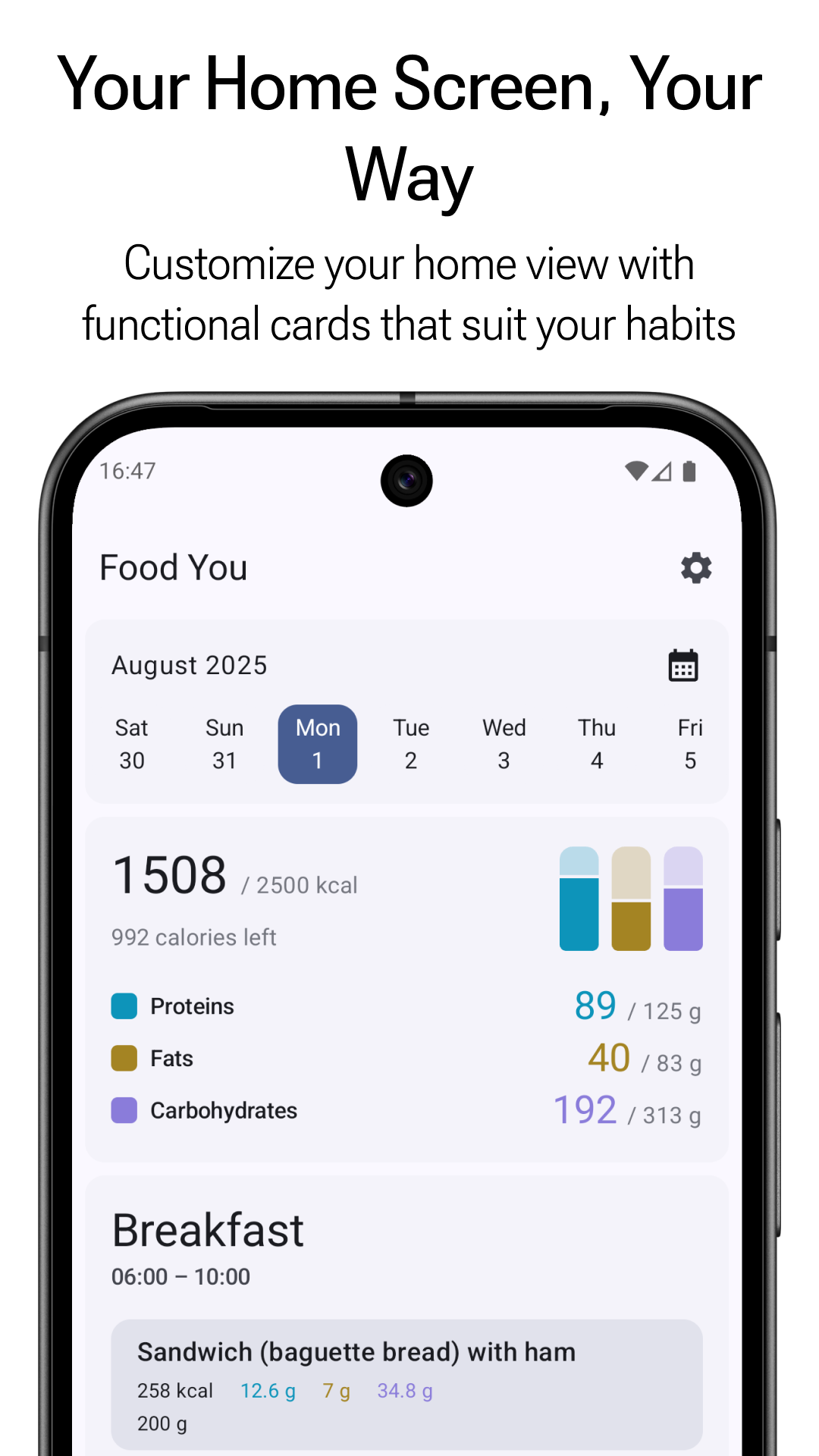
The first thing you notice is the main screen. The widget system lets you assemble only the cards you need. Don't want to track water or fiber? Simply remove them from the screen and keep only your protein goals and calories.
Main FoodYou features:
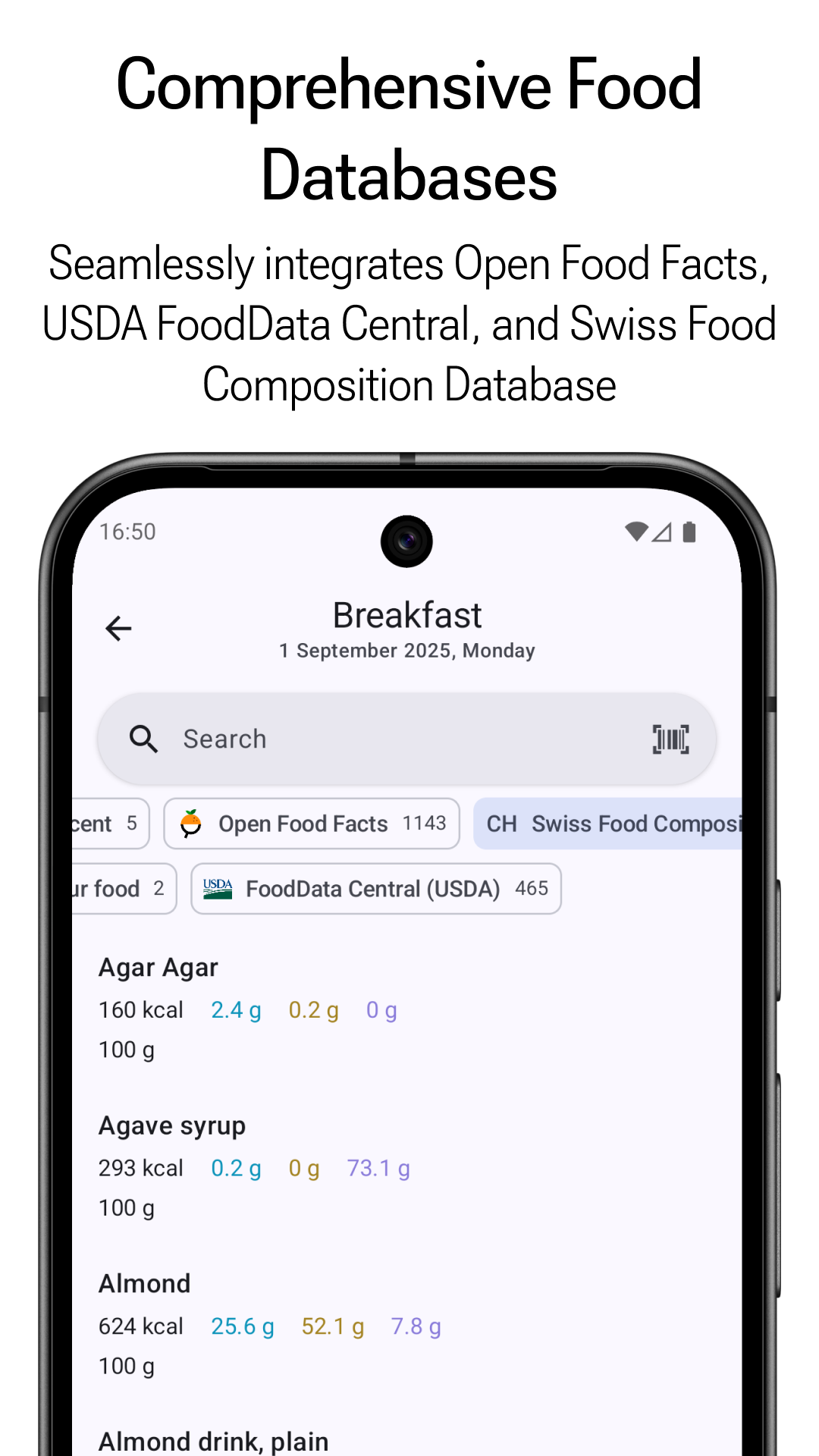
- Pulls product data from three open sources: Open Food Facts, USDA FoodData Central, and the Swiss nutritional database.
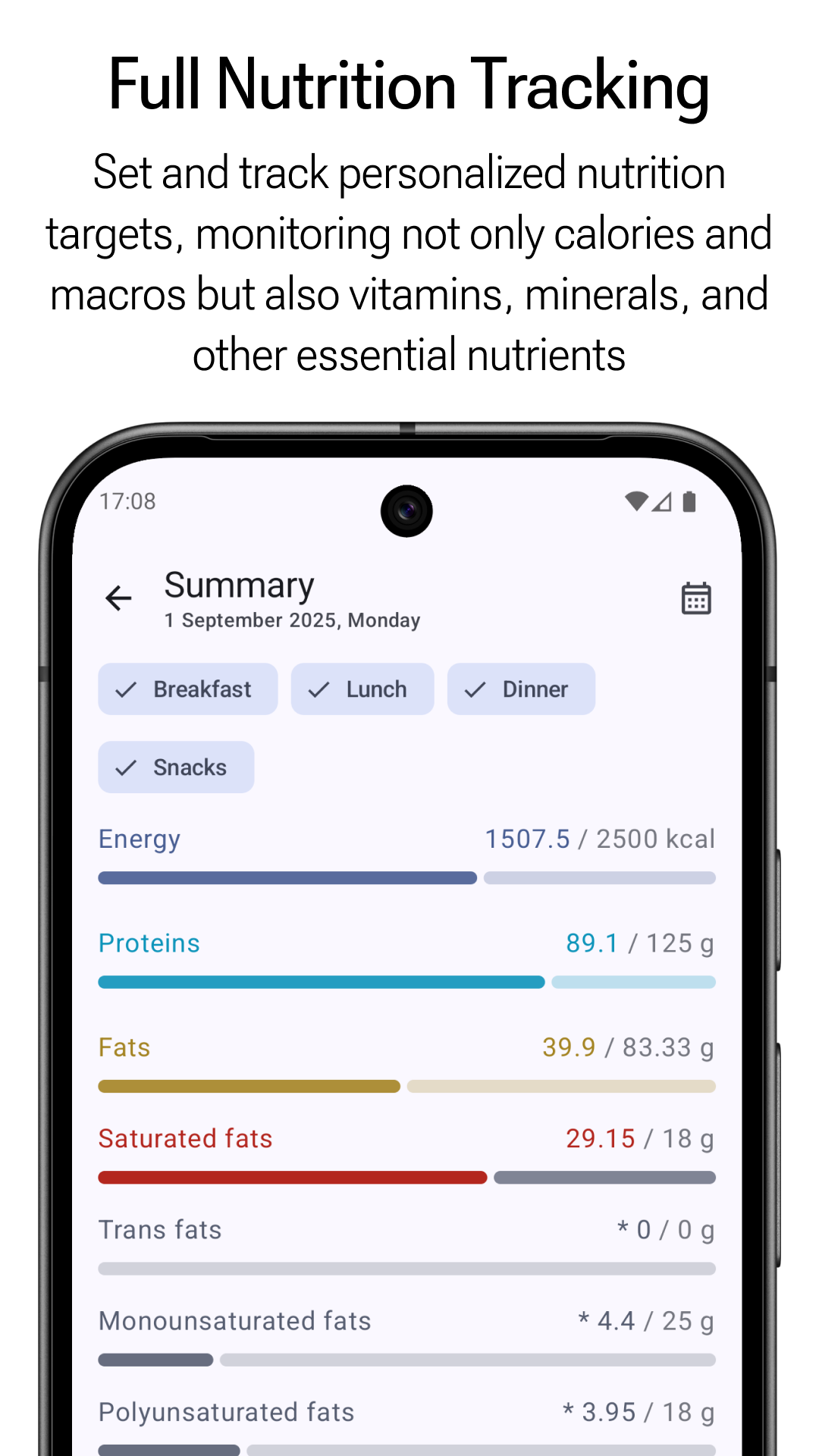
- Counts not only basic macros and calories, but also vitamins and minerals.
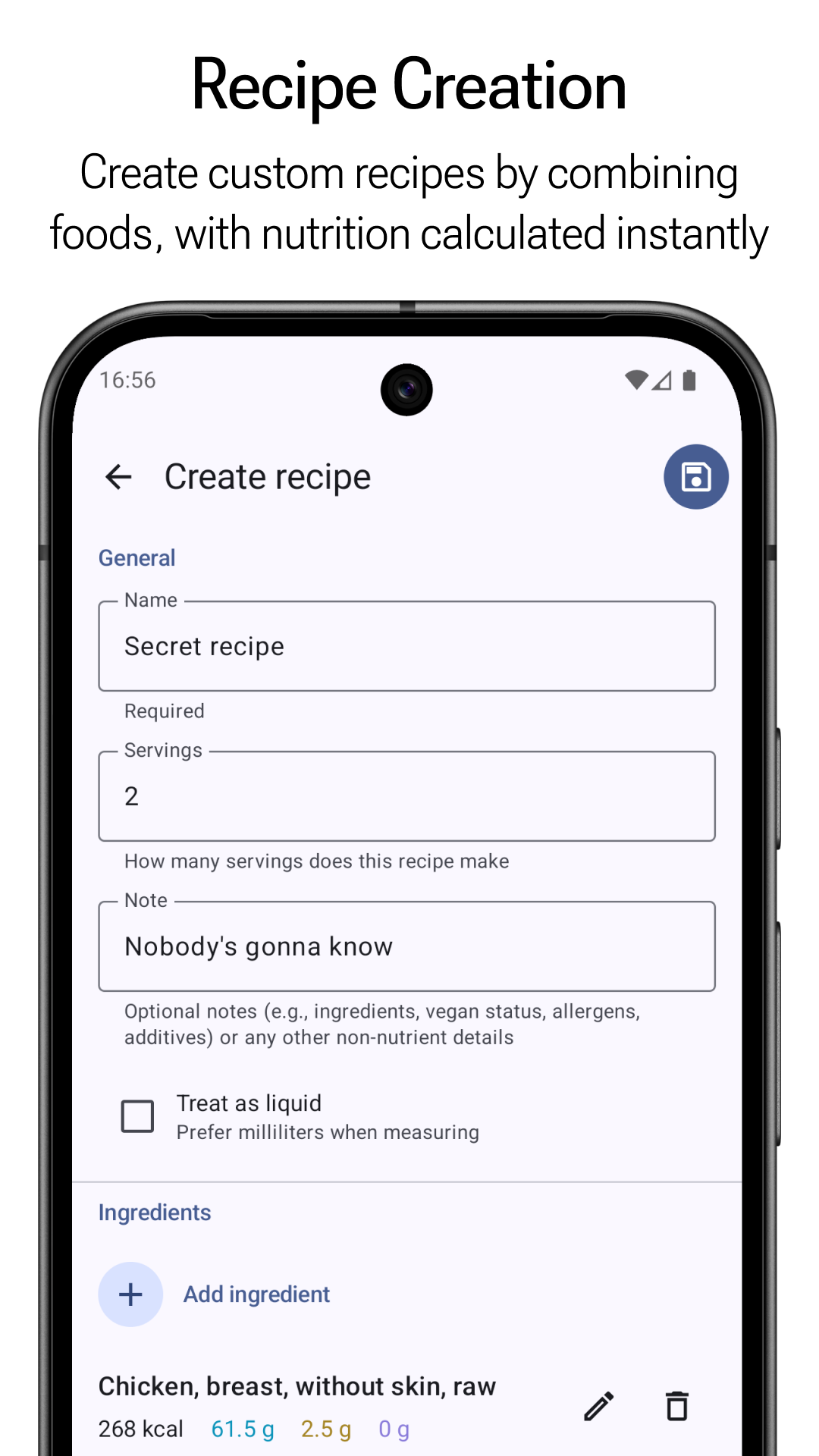
- Calculates complex recipe compositions. Add raw ingredients, and the program automatically recalculates the final nutrients per 100 grams of the finished dish.
- Adjusts the interface color palette to match Android system colors through Material You.
All data stays on the device. The code contains no analytics trackers, ads, or heavy network libraries for cloud connectivity.
An Unusual Approach to Open Source
The app is distributed under the GPL-3.0 license, with builds published on F-Droid and GitHub Releases. The project has honest reproducible builds: the signature hash from F-Droid matches the release on GitHub.
The repository description contains a rare detail. The author opened the source code but immediately warns: he doesn't accept code pull requests. The reason is simple business pragmatism — licensing and the fact that the app brings him a small income. It's an unusual approach for GitHub, but honest. That said, you can still help the project: the author accepts translations on Crowdin, bug reports, and feature requests.
The visual design is clearly inspired by the popular RSS reader ReadYou. And it worked out well. The interface is clean, without cluttered animations and pop-ups.
Alternatives
If you're into the idea of an offline nutrition diary but want to compare other options, the author himself shares similar open projects: OpenNutriTracker, Waistline, Energize, and FitBook.
Conclusion
FoodYou is for those who are tired of aggressive monetization in commercial alternatives and value a privacy-first approach. The app does one specific task, doesn't try to harvest your personal data, and works fine even in airplane mode. If you use Android and track your diet, it's definitely worth testing.
Related projects