How to Turn Text into Infographics and Back Using a Single Neural Network
Working with multimodal models used to feel like assembling a puzzle from mismatched sets. Need image understanding? Grab one encoder. Want generation? Attach a diffusion model. The result is a heavyweight "Frankenstein's monster" where components barely understand each other. The team at OpenSenseNova took a different approach with SenseNova-U1—not just another model combination, but a genuine attempt to create a unified brain for vision and text.
About the Project
SenseNova-U1 is a model series built on the NEO-unify architecture. The key innovation here is the word "native." The developers abandoned traditional visual encoders and VAE (Variational Auto-Encoder). Instead of translating images into some intermediate language the neural network understands, the model "thinks" in pixels and words simultaneously.
Why another model in 2026? First, it can generate text within images without the wild typos that plagued early Stable Diffusion iterations. Second, it understands context and can reason through edits. If you ask to "make the tea in a glass darker, as if it steeped for an hour," the model understands the physics of the process rather than just applying a brown filter.
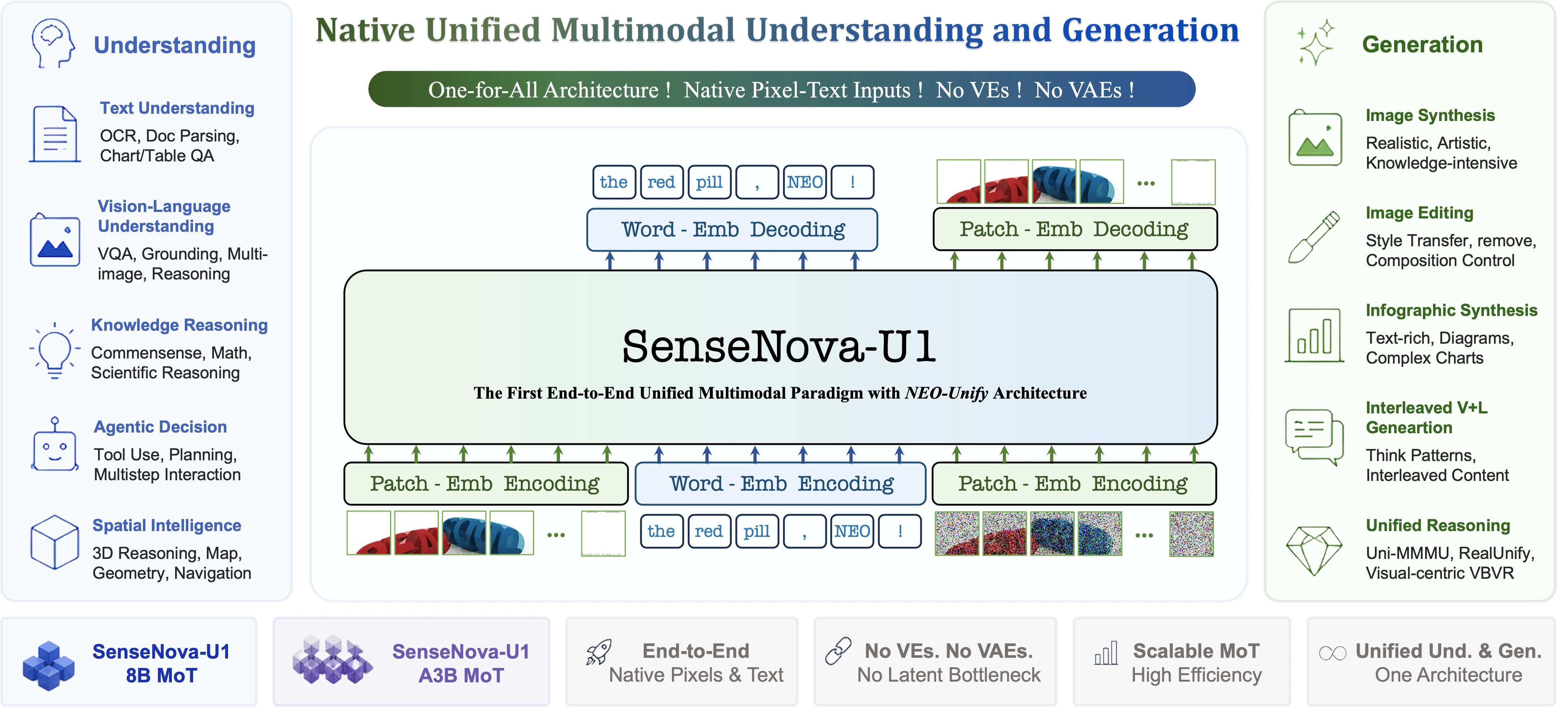
What SenseNova-U1 Can Do in Practice
The project is interesting because it addresses several pain points for content developers and analysts.
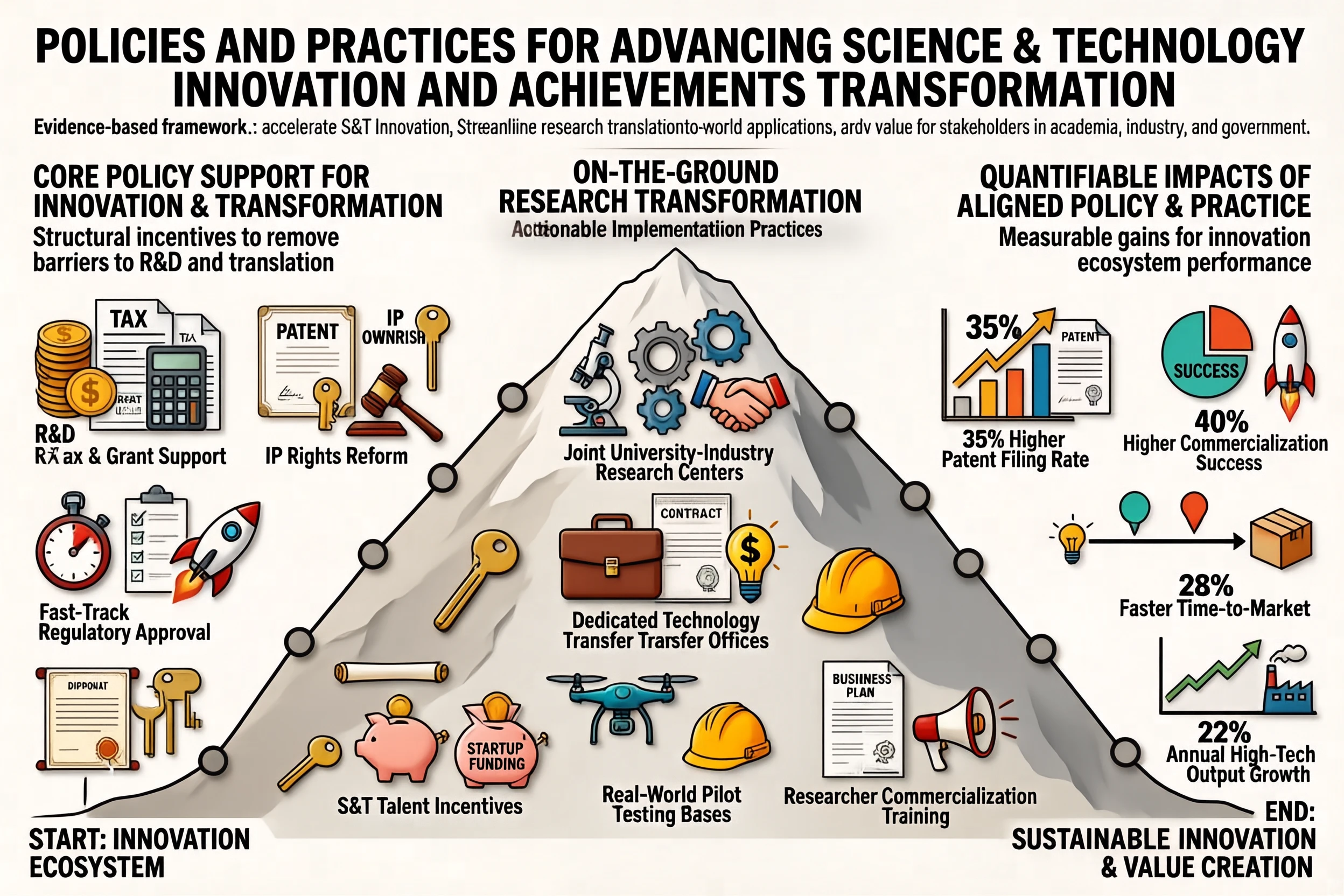
Complex Infographics
Neural networks typically produce "mush" instead of meaningful graphs. U1 has a specialized Infographic-V3 version. It can lay out posters, summaries, and presentations with clear title hierarchies and readable small text.
Smart Editing Through Reasoning
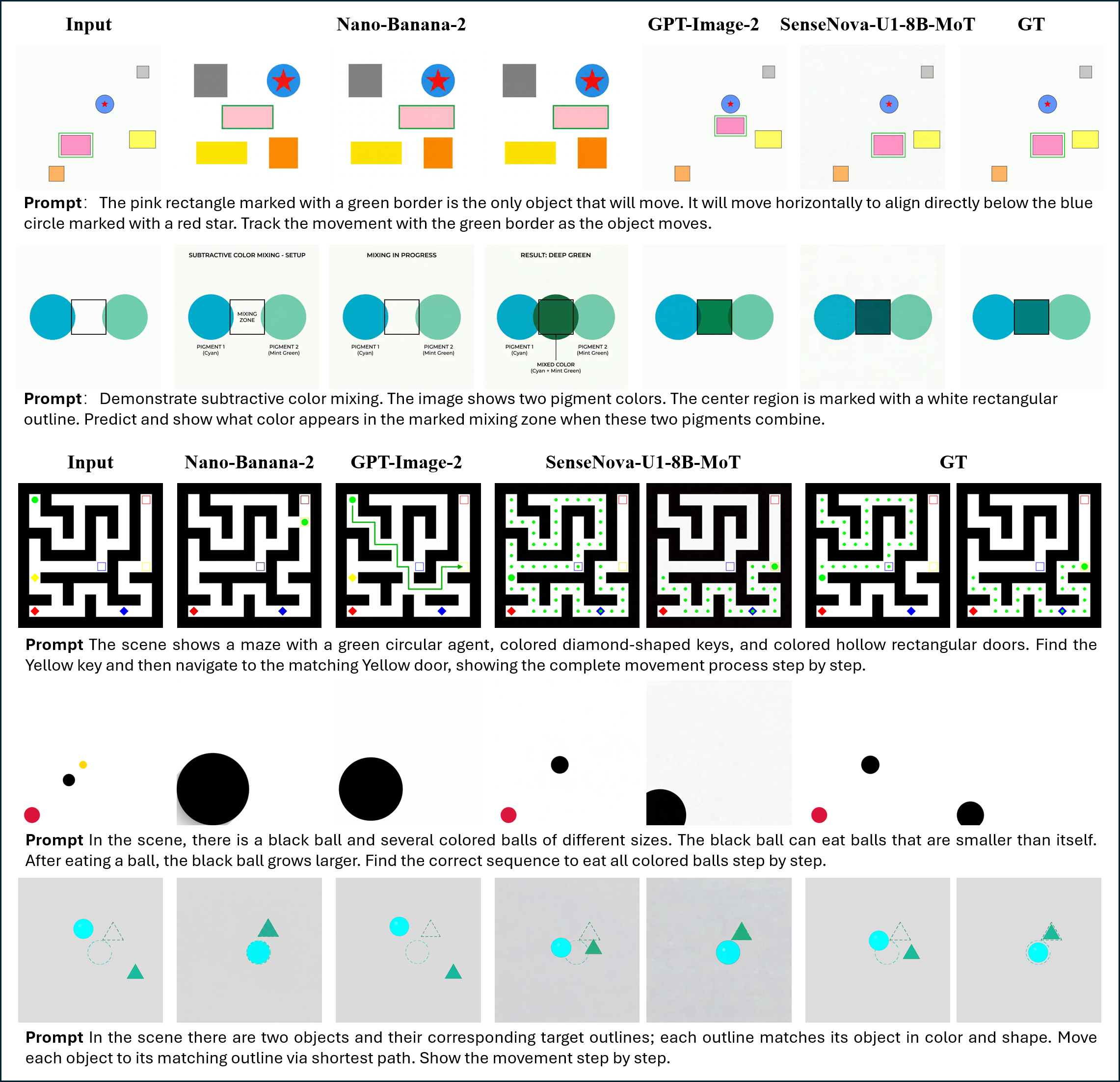
This is the coolest part. You provide an image and write instructions in natural language. For example: "Draw how these bananas will look when ripe." The model analyzes that the photo shows green bananas, recalls the biology, and redraws them yellow with characteristic spots. The repository is full of such examples: from changing the buoyancy of objects in water to aging objects.
End-to-End Content Generation (Interleaved Generation)
If you need to create an illustrated guide or travel diary, the model can generate a stream of text and images in a single pass. The images maintain consistent styling and characters, which was previously a headache.
Technical Internals and Sizes
The repository offers two main hardware options:
- 8B-MoT: a dense model with 8 billion parameters.
- A3B-MoT: a model based on MoE (Mixture of Experts) architecture that consumes fewer resources during operation.
Interestingly, the authors released GGUF-quantized weights. This means you don't need to own an H100 server to run it. The Q4 version runs comfortably on consumer GPUs with 10–12 GB of VRAM when using offload mode (when some layers are loaded from RAM).
How to Run and Try It
If you don't want to deal with the environment, the project has an online demo (SenseNova-Studio). But for local testing, everything is standard—Python and a set of scripts in the examples folder.
Installation via uv (a modern pip alternative):
uv pip install -e ".[gguf]"
Running simple VQA (answering questions about images):
python examples/vqa/inference.py \
  --model_path sensenova/SenseNova-U1-8B-MoT \
  --image examples/vqa/data/images/menu.jpg \
  --question "Что посоветуешь заказать на двоих из этого меню, если мы хотим сэкономить?"
For image generation:
python examples/t2i/inference.py \
  --model_path sensenova/SenseNova-U1-8B-MoT \
  --prompt "Постер в стиле киберпанк с надписью HELLO WORLD" \
  --num_steps 50
Is It Worth It
The project looks solid and, importantly, open. Of course, the README honestly mentions issues: the model can make mistakes in small human anatomy (fingers are an eternal problem) or sometimes confuse letters in very long text.
Who will this help? First and foremost, those doing automated content layout or complex visual search systems. The ability to "reason" over an image before generating or editing it opens the door to higher-quality AI agents.
If you work in Computer Vision or with LLMs, it's definitely worth looking at the NEO-unify code—at least to see how the authors got rid of classic encoders without breaking performance in the process.
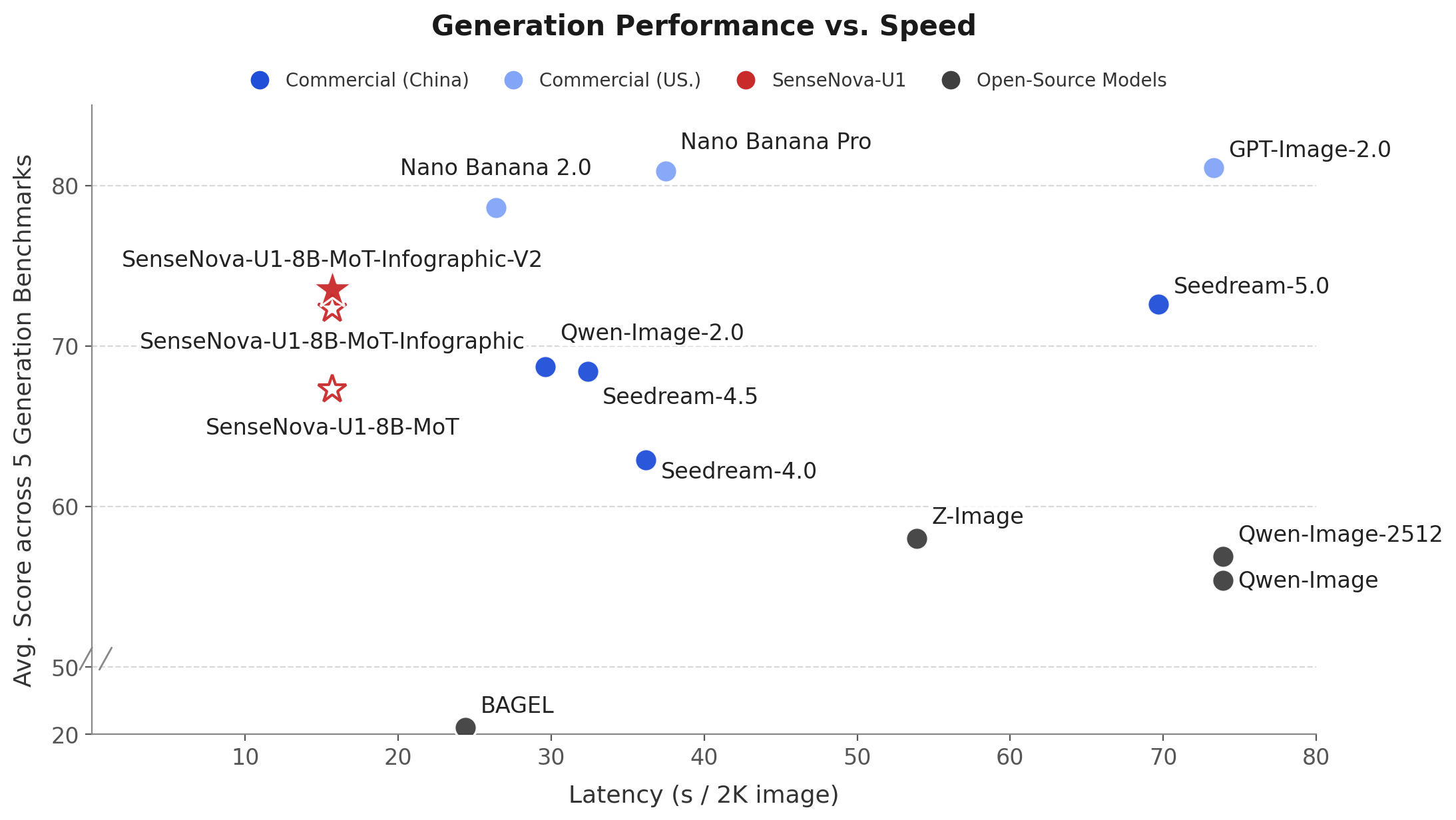
I'd suggest starting small: download the quantized 8B model and try it on editing tasks (Image Editing). This is the area where SenseNova feels most confident and delivers truly logical results.
Related projects