How to build a pocket multi-tool for radio signals and NFC yourself

A full-fledged Flipper Zero now costs a significant amount, and for simple experiments with home gate barriers, IR remotes, and access tags, you often want something more open and easier to repair. The FlopperZiro project author with the username lraton looked at this situation with irony, calling their brainchild a "horrible copy in broken English," but in fact built a working prototype of an autonomous multi-tool using readily available boards from China.
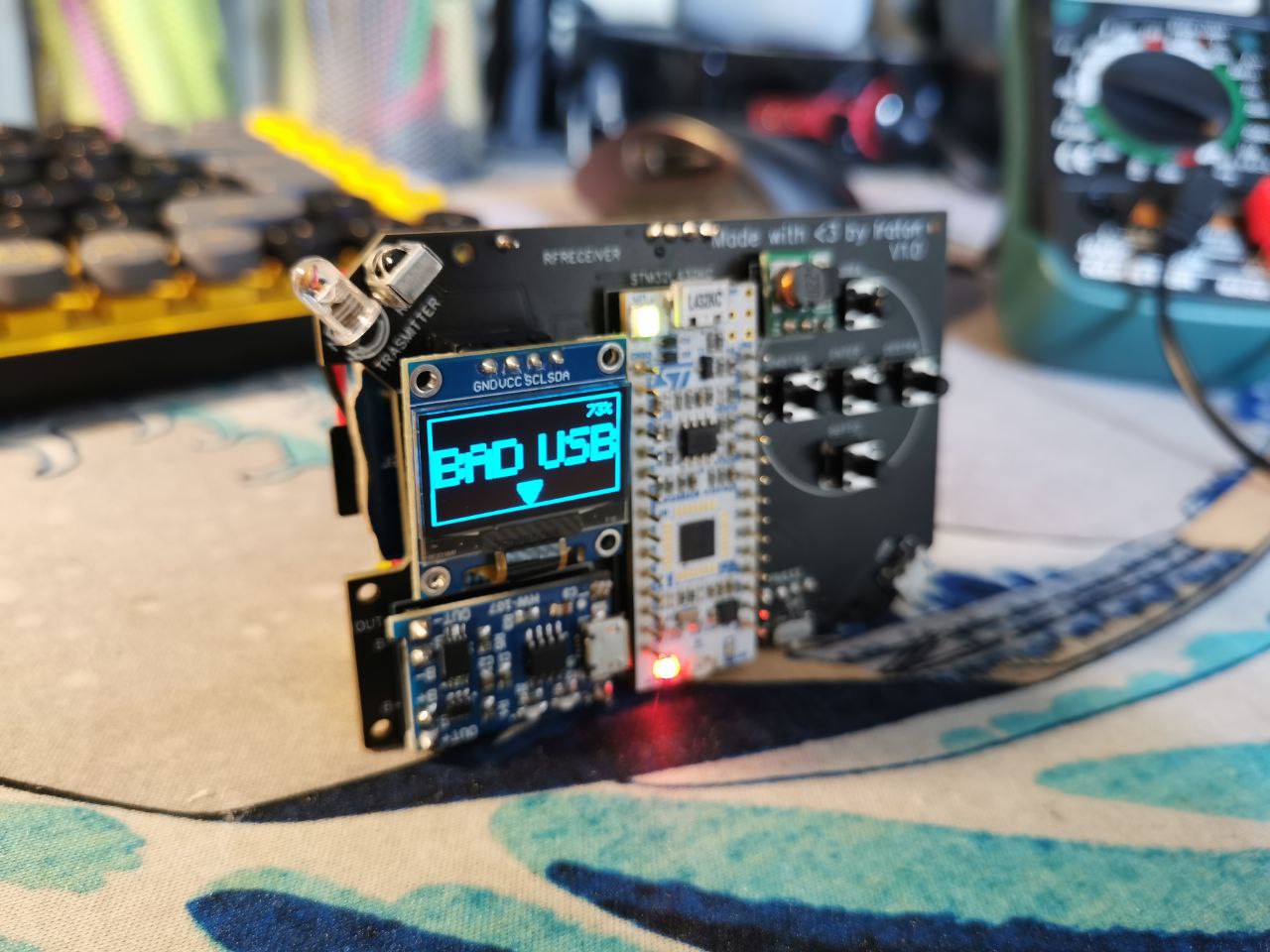
What this DIY gadget can do
The device handles a basic set of tasks for exploring radio protocols and interacting with peripherals. The firmware already has four main modules working:
- 433 MHz intercept and replay. The RXB12 receiver catches signals from gate remotes or simple relays, the firmware saves dumps to the memory card and transmits them back via the FS1000A transmitter.
- Infrared port. The receiver and IR LED work in tandem, so the device reads commands from home remotes for TVs or air conditioners, saves them to files, and replays them at the press of a button.
- NFC and RFID with the PN532 chip. The device can read standard tag and card UIDs, emulate targets, and send APDU packets. ISO14443-B support is still on the roadmap, but for simple functionality tests it's sufficient.
- BadUSB keyboard emulation. The microcontroller pretends to be an HID device and executes Rubber Ducky format scripts directly from the memory card.
It also runs a file browser for navigating the MicroSD, a battery charge indicator, and a display control module.
What's inside this device
The main advantage of FlopperZiro over complex projects using specialized chips is the availability of radio components. All parts can easily be ordered from marketplaces or found in a box of old Arduino modules:
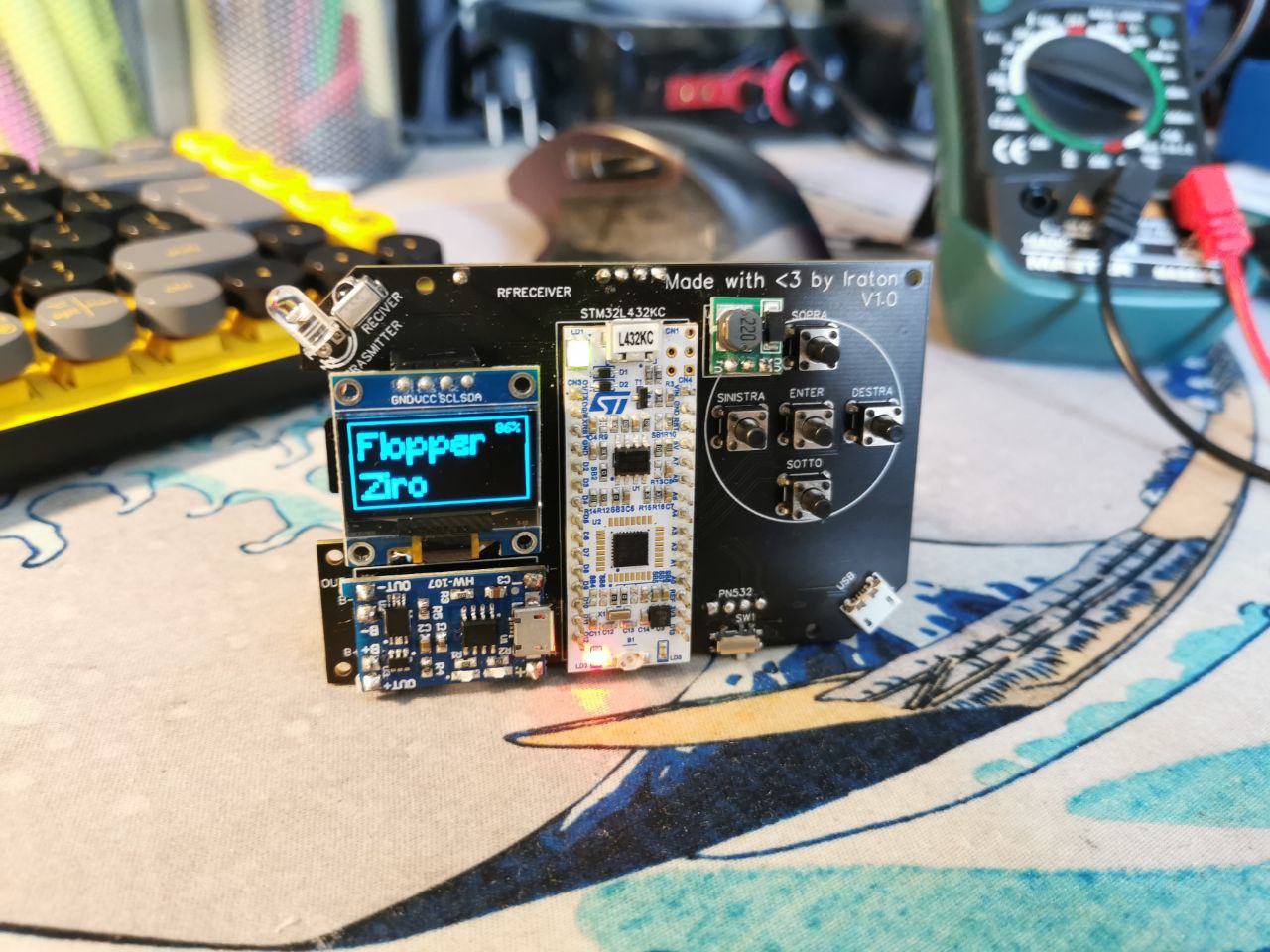
- Microcontroller: STM32-L432KC board
- Display: monochrome OLED SSD1306 with 128x64 pixel resolution
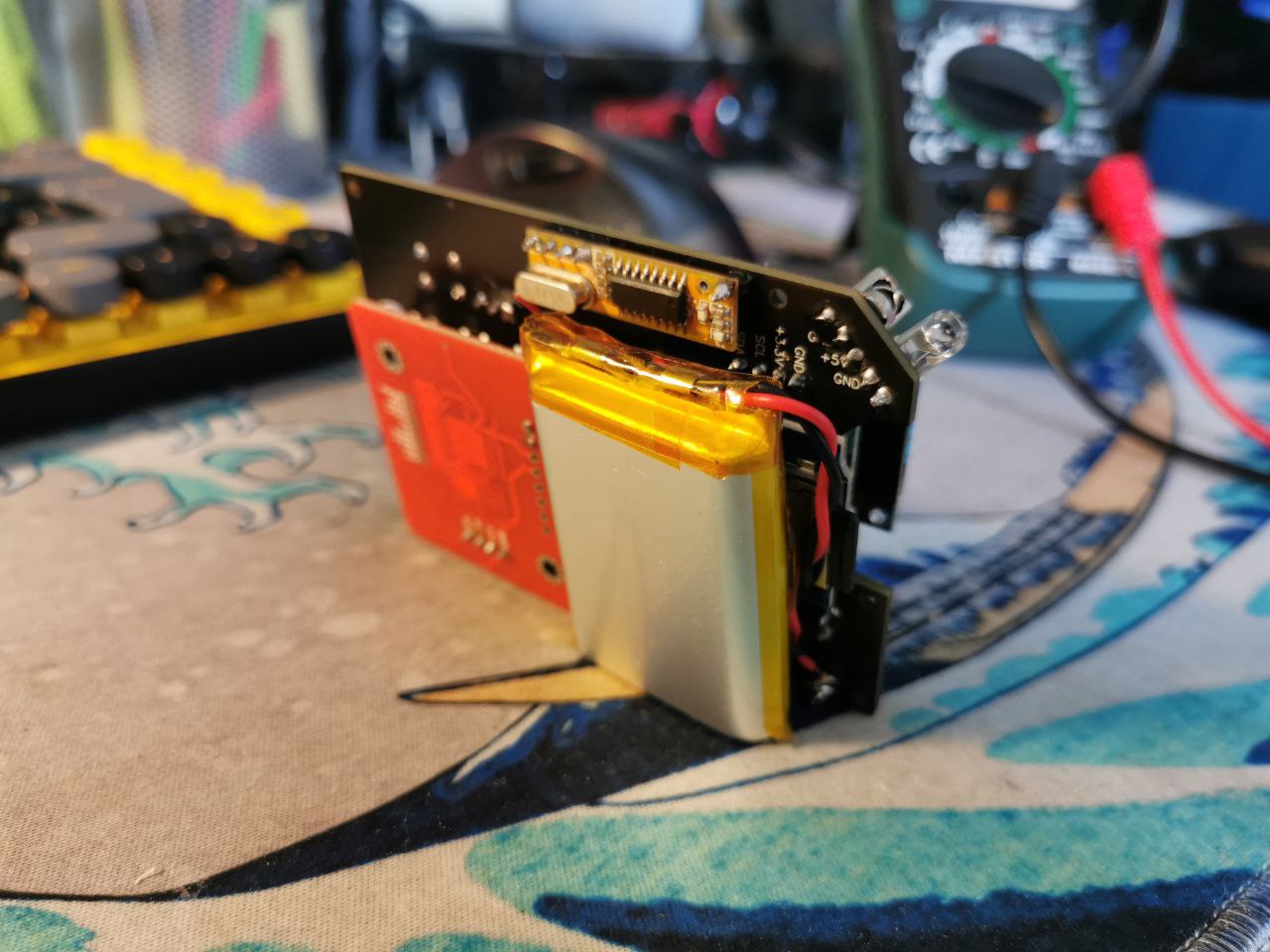
- Radio modules: FS1000A transmitter and superhet receiver RXB12 at 433 MHz
- NFC module: popular PN532 controller
- Storage: standard TF MicroSD Card Shield
- Power: TP4056 charging board with step-up converter to 5V and 3.7V LiPo battery
- Controls: six tactile buttons and a 2N2222A transistor for IR LED amplification
The case can be 3D printed on a standard FDM printer. The author shared a ready-made 3D model on Printables that tightly accommodates both PCB revisions and the battery.
Pitfalls and firmware nuances
The codebase is written in C++ for the Arduino IDE. This significantly lowers the entry barrier if you need to write your own plugin or tweak a specific protocol for an exotic gate barrier.
But simplicity has a downside. For example, the author honestly warns about a funny bug: right after uploading a new sketch through the Arduino environment, the device screen may stay dark. The issue lies in the SSD1306 display's hardware reset timings. The fix is opening the serial monitor in the IDE, which initiates a correct software restart via USB.
Who will benefit from this project
FlopperZiro doesn't claim to be a laboratory-grade radio signal analyzer. The FS1000A transmitter has modest range, and the antenna is just a piece of wire. Nevertheless, it's an excellent training ground for students and developers who want to understand how SPI, I2C, sub-GHz raw packet reading, and smart card protocols work without spending extra money.
Schematics and source code are available in the project's GitHub repository under the GPL-3.0 license. Building it only requires basic soldering skills and the Arduino IDE installed.
Related projects